
If your passport was stamped on the way back into Spain and you hold residence here, the stamp does not change your status. What has changed is the system behind the stamp. Since April 2026 Spanish border posts record most crossings digitally, and the document you carry now decides whether you are recorded at all.
Do passports still get stamped at the Spanish border
For most short stay travellers, no. The ink stamp has been replaced by an electronic record of each entry and exit. Border officers still check the passport, but the crossing is logged in a database rather than written onto a page.
There are three situations where a stamp still appears.
- Some crossing points fall back on manual stamping when the system is unavailable.
- Travellers who cannot be registered biometrically may be stamped as a contingency.
- Residents are sometimes stamped by mistake, usually when they present only a passport and the officer has no way of seeing that they live here.
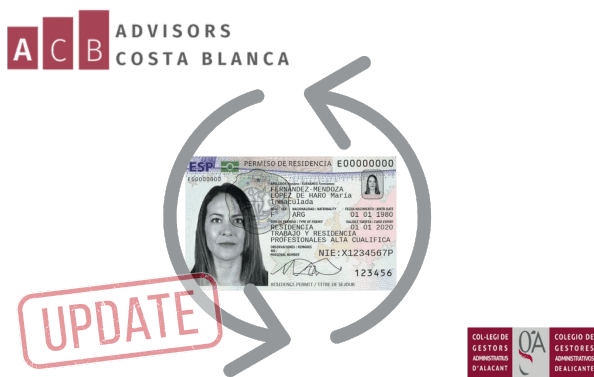
Holders of a biometric TIE card in Spain should not be stamped or registered at all.
How the EU Entry/Exit System (EES) replaced passport stamps
The Entry/Exit System began a progressive roll out on 12 October 2025 and became fully operational on 10 April 2026 across 29 European countries, Spain among them. It applies to non-EU nationals travelling for short stays.
At the first crossing after registration, the system takes a facial image, fingerprints and the personal data held in the travel document. From then on, each entry, each exit and any refusal of entry is stored against that record. The practical effect for visitors is that the 90 days in any 180 day allowance is now counted automatically, by the database, instead of being reconstructed from stamps by whichever officer happens to be on duty.
That automatic count cuts both ways. Nobody has to argue about an illegible stamp any more, but nobody can rely on a missing one either.
¿Should my passport be stamped if I am a resident in Spain?
No. Under the guidance the European Commission issued for UK nationals, manual stamps should no longer be affixed in the passports of beneficiaries of the Withdrawal Agreement, and those beneficiaries are exempt from the EES, so no electronic record is created for them.
The strength of that protection depends on which document you hold, and the difference matters if you ever have to argue your case at a desk. For holders of a residence card issued under the EU free movement directive, the exemption from stamping sits in the binding text of the Schengen Borders Code, and the officer has no discretion. That covers non-EU family members of EU citizens who hold Spanish residency for EU citizens as family members. For UK nationals covered by the Withdrawal Agreement, non-stamping rests on a Commission recommendation instead. EU law does not forbid stamping a valid residence permit holder, and the Commission advises against it.
In both cases one point is settled. A stamp cannot shorten or affect the length of your authorised long term stay. A wrongly stamped passport is an administrative nuisance, not a threat to your residence.
¿Which Spanish residence document keeps you out of the EES?
The Withdrawal Agreement lists one document in a uniform format, and the biometric TIE is it. Everything else is treated as supporting evidence, which is why two residents can present themselves at the same desk and be handled differently.
| Document | Exempt from EES | Stamped at the border | What to do |
|---|---|---|---|
| Biometric TIE (Withdrawal Agreement) | Yes | No | Carry it with your passport on every crossing |
| Tarjeta verde (pre Brexit certificate) | No | Possible | Exchange it for a TIE |
| Certificate of application in progress | Not guaranteed | Possible | Carry it with proof of address in Spain |
| EU family member residence card | Yes | No, exemption is binding | Present the card unprompted |
Spain operates a declaratory scheme, which means your rights come from having exercised free movement before 31 December 2020 rather than from the plastic in your wallet. If your document is not the uniform format one, you may still cross as a beneficiary by showing credible evidence of your right of residence here, and documents carrying your Spanish address help. Decisions are taken case by case, with no guarantee of entry, which is the reason the Commission encourages beneficiaries to travel directly to their host state.
What to do if your passport is stamped by mistake
At the border, before the stamp is applied
Hand over your passport and your residence document together, without waiting to be asked. UK government guidance for residents in Spain is blunt about the consequence of not doing so, warning that your passport may be stamped if you do not. If the officer reaches for the stamp anyway, say that you are resident in Spain, point to the document and ask for a supervisor if the conversation stalls.
If the stamp has already been applied
Your residence rights are unaffected and the stamp does not consume any part of a visitor allowance you are not subject to. Some border authorities will annul an incorrect stamp on request, although they are not obliged to. Note the date, the crossing point and the officer's name or identification number, because a complaint without those details goes nowhere. Complaints can be raised with the Policía Nacional and, where a resident's free movement rights are involved, through the European Commission's SOLVIT network.
An incorrect electronic record is handled differently from a stamp. A beneficiary can ask the authorities of the host state to amend the EES record by providing evidence of their status, and the data is deleted once the correct residence document is granted. The same applies while a document is being reissued, so keep the resguardo with you if you are renewing your TIE card and travelling in the meantime.
Non-residents and second home owners under the 90/180 rule
Owning a property in Spain does not extend the 90 days in 180 allowance, and it never did. The change is in how those days are counted.
The old complaint among second home owners was the missing exit stamp. Visitors were stamped on the way in, left without being stamped on the way out, and then had to prove on a later trip that they had not overstayed. The electronic record removes that problem, because the exit is logged whether or not anything is written in the passport. The flip side is that overstays are now flagged automatically and consistently. If you hold no Withdrawal Agreement document and spend more than 90 days in any 180 day period, the system will treat you as an overstayer.
The counting applies to the whole Schengen area, not to Spain alone, so time in France or Portugal comes off the same allowance. Arriving by car, train or ferry makes no difference to the rule, although land and sea crossings are where registration queues and manual fallbacks are most common. For stays beyond three months, a residence route such as the non-lucrative visa in Spain replaces the visitor allowance.
Why a tarjeta verde is no longer enough at the border
UK government guidance states that green certificates will not be recognised by the EES, that holders will need to register, and that the TIE is the only residency document listed in the Withdrawal Agreement. On that basis a tarjeta verde cannot be used as proof that you are exempt. Both the Spanish authorities and the British Embassy strongly recommend exchanging it for a TIE. We handle the exchange, including the appointment and the paperwork. Tell us which document you hold and we will confirm whether an exchange applies to your case and what it involves.
Common questions about passport stamps in Spain
Will the authorities cancel a stamp that was applied by mistake?
Sometimes, on request, at the discretion of the border authority. There is no obligation to do it and no procedure that guarantees it.
Do the stamped days count against me as a visitor?
No. A stamp cannot affect the length of your authorised long term stay as a resident.
Does my tarjeta verde work in France or Portugal?
It carries the same weakness anywhere in the Schengen area. The EES is shared across the 29 participating countries, and the certificate is not the uniform format document those systems are built to recognise.
What about the stamps I collected before April 2026?
They stay in the passport and remain part of the travel history an officer can look at. They are not transferred into the electronic record, and as a resident they have no bearing on your status.
I am waiting for my TIE appointment. Can I travel?
You can, and you should carry the certificate showing the application is in progress together with documents proving your address in Spain. Registration or a stamp is still possible, because the evidence is assessed case by case.